We can't promise a rainbow. But we can tell you
when the conditions are just right to step outside.
No app download Β· Works in any browser Β· Free
Hawaii is called the Rainbow State for a reason β the mountain ranges force warm trade winds upward, creating rain on one side of each island while the sun shines on the other. Over 200 rainbow days a year in areas like Kailua and KΔne'ohe on Oahu, and similarly on the windward slopes of Maui, Kauai, and the Big Island.
But rainbows aren't in weather forecasts. This map fills that gap. It checks the actual conditions β sun angle, cloud cover, and rainfall β across each island every 10 minutes and scores each 2β4 km area from 0 to 100.
It won't guarantee a rainbow. But when the score is high, it's worth stepping outside.
Four conditions are checked to calculate each area's rainbow score.
Each colored dot represents a 2β4 km area and its current rainbow score. Tap any dot for details.
The bar at the bottom of each map lets you step through the next 6 hours of predicted rainbow conditions, one hour at a time.
How the forecast is calculated: every 10 minutes, the same rainbow score algorithm runs against 48-hour weather model data from Open-Meteo, picking the next 6 future UTC hours. Think of it as 6 snapshots of what conditions are predicted to look like β not a guarantee, but a useful guide for planning your morning or evening.
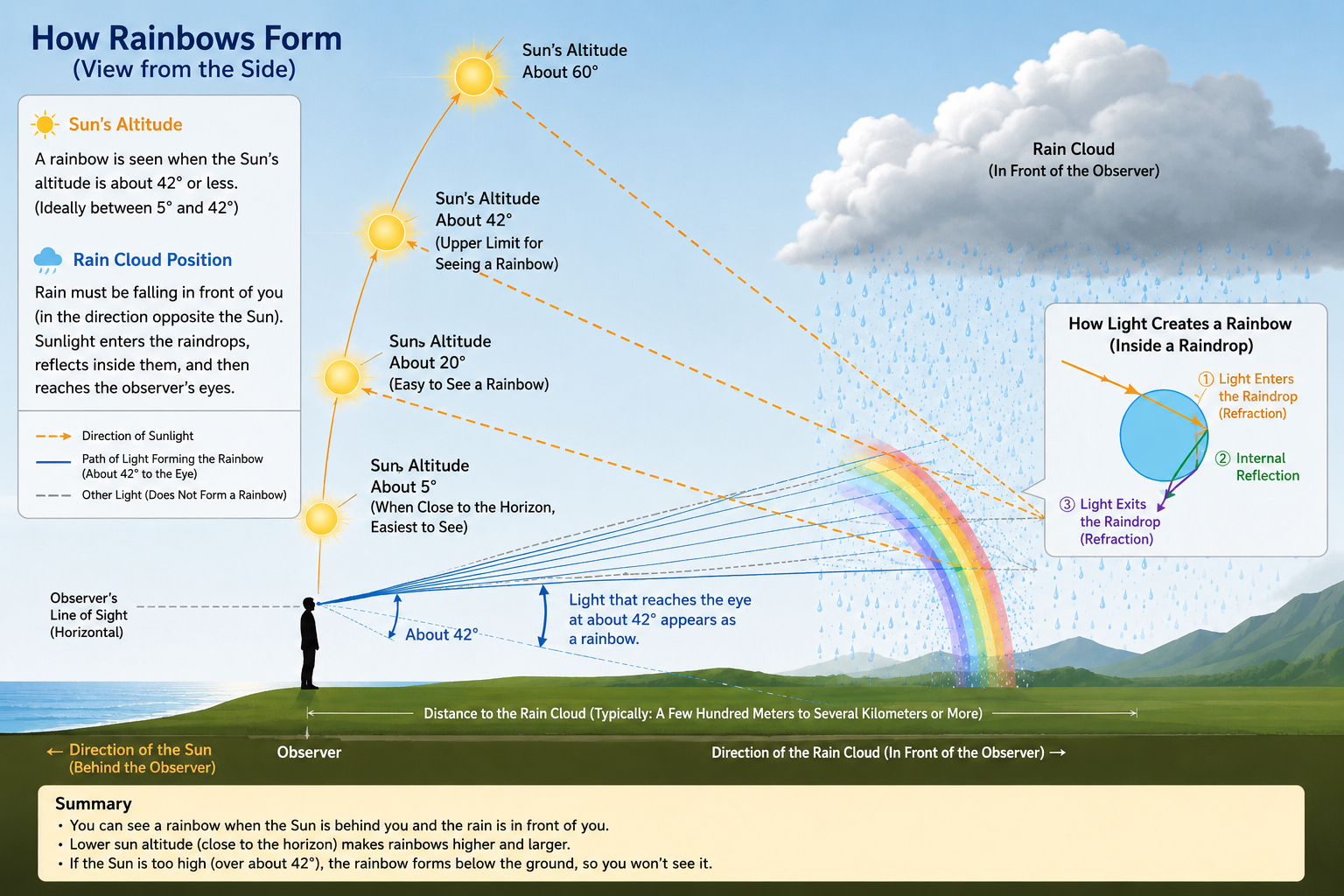
A rainbow forms when sunlight enters a raindrop, reflects inside it, and exits at an angle of about 42Β° toward your eyes. That's why the sun must be behind you and the rain in front of you β and why the sun's altitude matters so much.
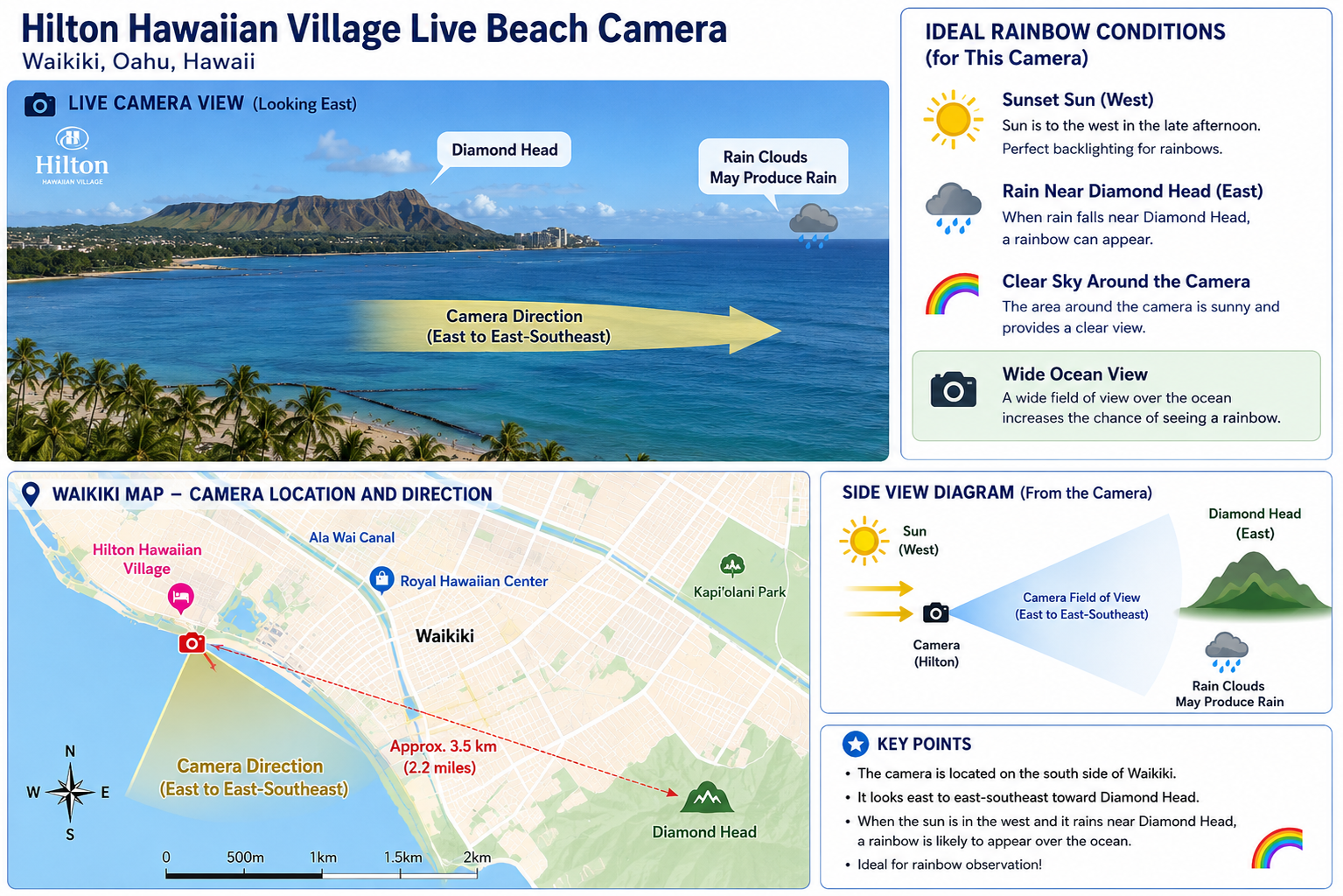
The EarthCam Waikiki Beach camera faces east β the exact direction rainbows appear during late afternoon when the sun is behind you in the west. If the Oahu score is high and you see color on the cam, go outside.
π Approx. camera location on Waikiki Beach Β· Orange cone = east-facing field of view
Early morning and late afternoon after a shower β
that's when Hawaii puts on a show. Pick your island.